
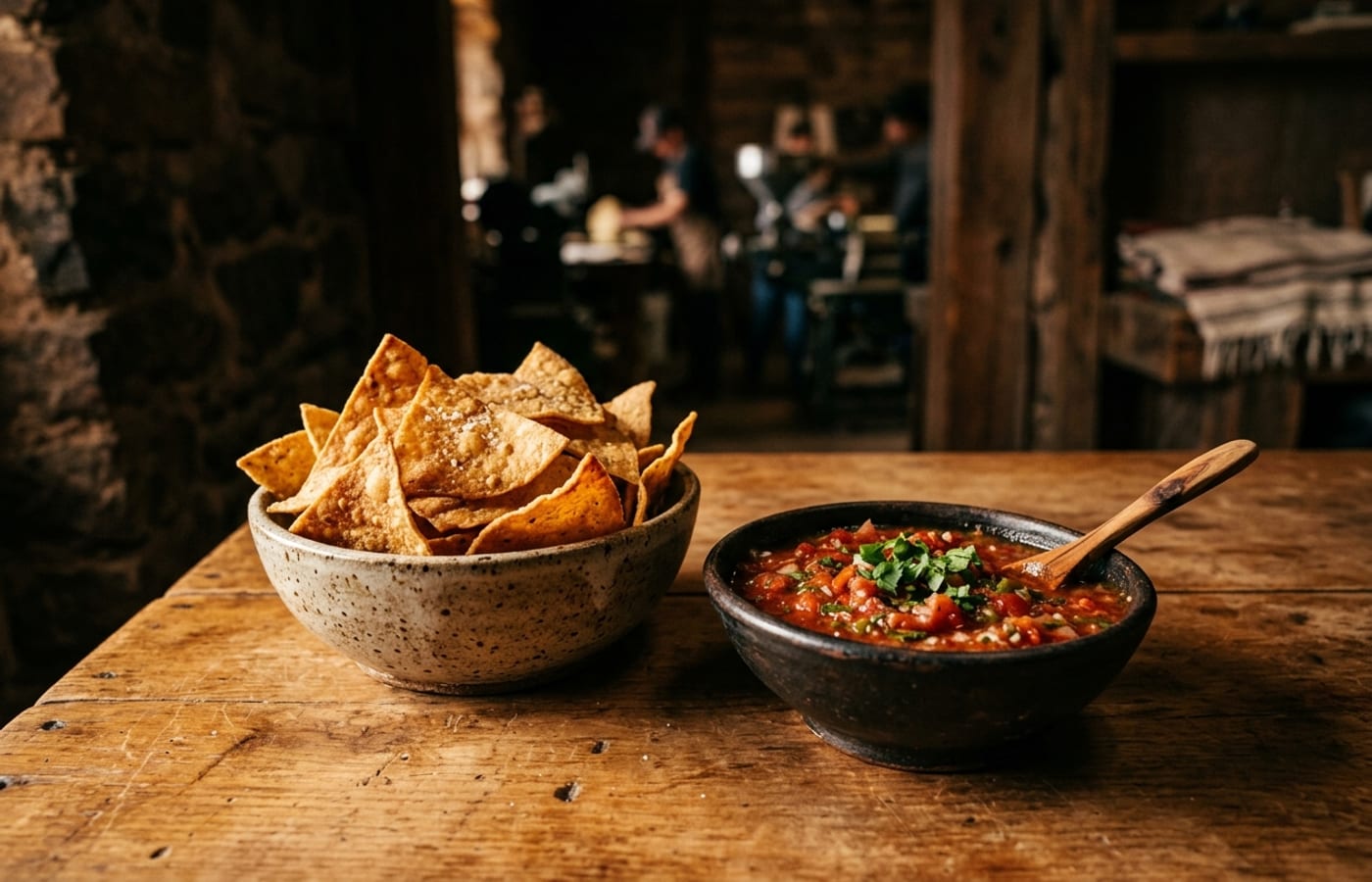
Why tortilla chips go stale
Chips go stale through two processes happening at the same time. The first is moisture absorption: the chip pulls humidity from the air, which softens the starches that give it crunch. The second is fat oxidation: the oil used in frying breaks down over time, producing off-flavors. Both happen faster once the bag is opened and the chip is exposed to air.
Chips made without preservatives — like ours — oxidize somewhat faster because they do not contain antioxidants like TBHQ or BHA, which slow the fat breakdown. The trade-off is that the flavor is cleaner when fresh. For restaurants turning chips daily or weekly, that is a reasonable trade. For chips sitting in a stockroom for a month, it becomes a problem.
Staling is not simply drying out. Cooked starches undergo retrogradation — the molecules, which loosened up when heated in the fryer, gradually realign into a tighter crystalline structure. This makes the chip feel hard and cardboardy rather than crisp. Adding moisture makes it worse; heat reverses it.
The oven method: how to revive stale chips
The oven is the most reliable tool for reviving chips that have gone soft. The process works by driving off the absorbed moisture and briefly re-heating the starches, which partially restores crunch. Here is what works:
- Preheat your oven to 300°F (150°C). Not 350°F. Higher temperatures burn the edges before the center crisps. This is the most common mistake.
- Spread chips in a single layer on a sheet pan. Do not pile them — overlapping chips steam each other and stay soft. A single layer is non-negotiable.
- Bake for 5 to 8 minutes. Check at 5 minutes. The chips should look the same — this is not a browning process. You are just heating them through.
- Let them cool completely before serving. The crunch comes back as they cool, not while they are hot. Chips pulled hot from the oven will feel soft; the same chips five minutes later will snap cleanly.
This method works on chips that have gone soft from humidity but have not yet gone rancid from oxidation. If the chips taste stale or have an off smell, no amount of oven time will fix the flavor — oxidized fat is a chemistry problem, not a moisture problem.
Reviving chips in a commercial kitchen
Restaurant kitchens have a few tools that home cooks do not. A convection oven circulates air more efficiently than a standard oven and typically crisps chips faster — try 275°F for 4 to 5 minutes. A salamander broiler works if you keep the chips far enough from the element that they heat through without scorching; this takes practice and is easier to get wrong than the oven method.
Some kitchens re-fry stale chips briefly in clean oil at 325°F for 30 to 45 seconds, then drain and salt. This works well but requires an available fryer, adds calories back, and can oversalt if the chips are already salted. Use this method when you have the oil temperature steady and the time to do it properly.
For table chips — chips served as a pre-meal offering rather than a menu component — the oven method is usually faster and more consistent. For chips going into a dish (chilaquiles, nachos, tortilla soup), re-frying produces a better texture because the oil re-coats the chip surface and creates a more even crunch.
How to store tortilla chips to prevent staling
The goal is to limit exposure to air and humidity. In practice:
- Seal the bag completely after every use. A chip clip is adequate for a day; an airtight container or a bag with the air pressed out is better for longer storage.
- Keep chips away from heat sources. Humidity aside, chips stored near a fryer, steamer, or dishwasher pick up residual heat and moisture that accelerates both staling mechanisms. A cool, dry shelf away from the hot line is ideal.
- Do not refrigerate chips. Refrigerators are high-humidity environments. Chips stored in the fridge absorb moisture faster than chips stored at room temperature in a sealed container. Cold also accelerates starch retrogradation.
- Use the oldest stock first. FIFO — first in, first out — is basic stock rotation, but it matters more for no-preservative chips than for commodity chips. A case that sits behind a newer delivery for two weeks will taste noticeably different from one turned in a week.
How freshness at the source affects shelf life
Chips that come off the fryer and into the bag the same day they are delivered start with more time before they go stale than chips that spent days in a distribution center. This is one reason we are not a national brand and do not want to be: the farther a chip travels, the older it is when it arrives.
Our chips go from the fryer to Sysco, Ben E. Keith, and US Foods routes that reach Texas and New Mexico restaurants within a short distribution window. Direct pickup from the factory in Muleshoe means same-day fresh. For restaurants in Lubbock, Amarillo, or the New Mexico border markets, the freshness advantage over a chip shipped from a plant in the Midwest or East Coast is meaningful.
The underlying logic is straightforward: a chip that starts fresher has more time before it stales. Storage methods slow the clock; they do not reset it. Starting with the freshest possible chip gives you more margin.
When to throw chips out
Chips that have absorbed moisture can usually be revived. Chips that smell rancid, taste stale in the back of the throat (the characteristic burned-oil flavor of oxidized fat), or have visible discoloration should be discarded. These are chemistry failures that heat cannot fix.
The practical test: eat one chip before committing to a revival attempt. If the flavor is flat but not unpleasant, the oven method will likely work. If the chip has an off smell or a bitter, lingering aftertaste, the fat has oxidized past recovery.
For restaurants, the decision calculus also involves food safety and brand reputation. A customer who gets a stale chip remembers it. The cost of tossing a case of chips that are on the edge is lower than the cost of a table that does not come back.
A note on chip type and staling rate
Not all tortilla chips stale at the same rate. Thicker chips — generally cut from thicker tortillas — have more mass to retain crunch and stale more slowly than thin chips. Heavily salted chips sometimes stale faster because salt is hygroscopic (it attracts moisture). Chips made from fresh corn tortillas start with a higher moisture content than chips made from dried masa, which affects both the initial fry and the staling rate.
Our chips are cut from the same corn tortillas we sell wholesale — not from dried masa or a separate manufacturing process. They fry with a different baseline moisture profile than a chip made from reconstituted masa, which affects texture and flavor both fresh and as they age. For buyers comparing chips side by side, this is worth knowing.